Real store listing · independent assessment pending.

4.3 ★6 ratings
—Downloads
17+Age rating
57 MBApp size
FreeIn-app purchases
About this app
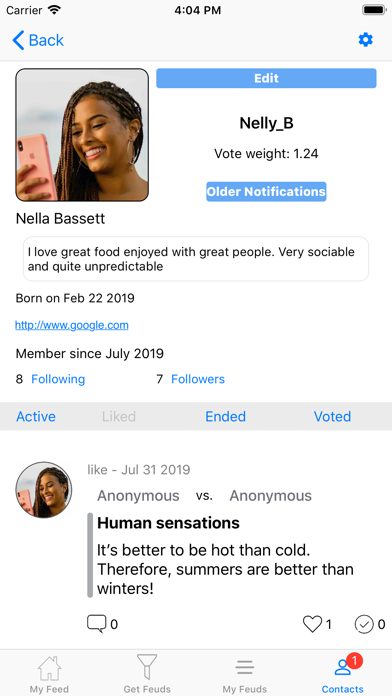
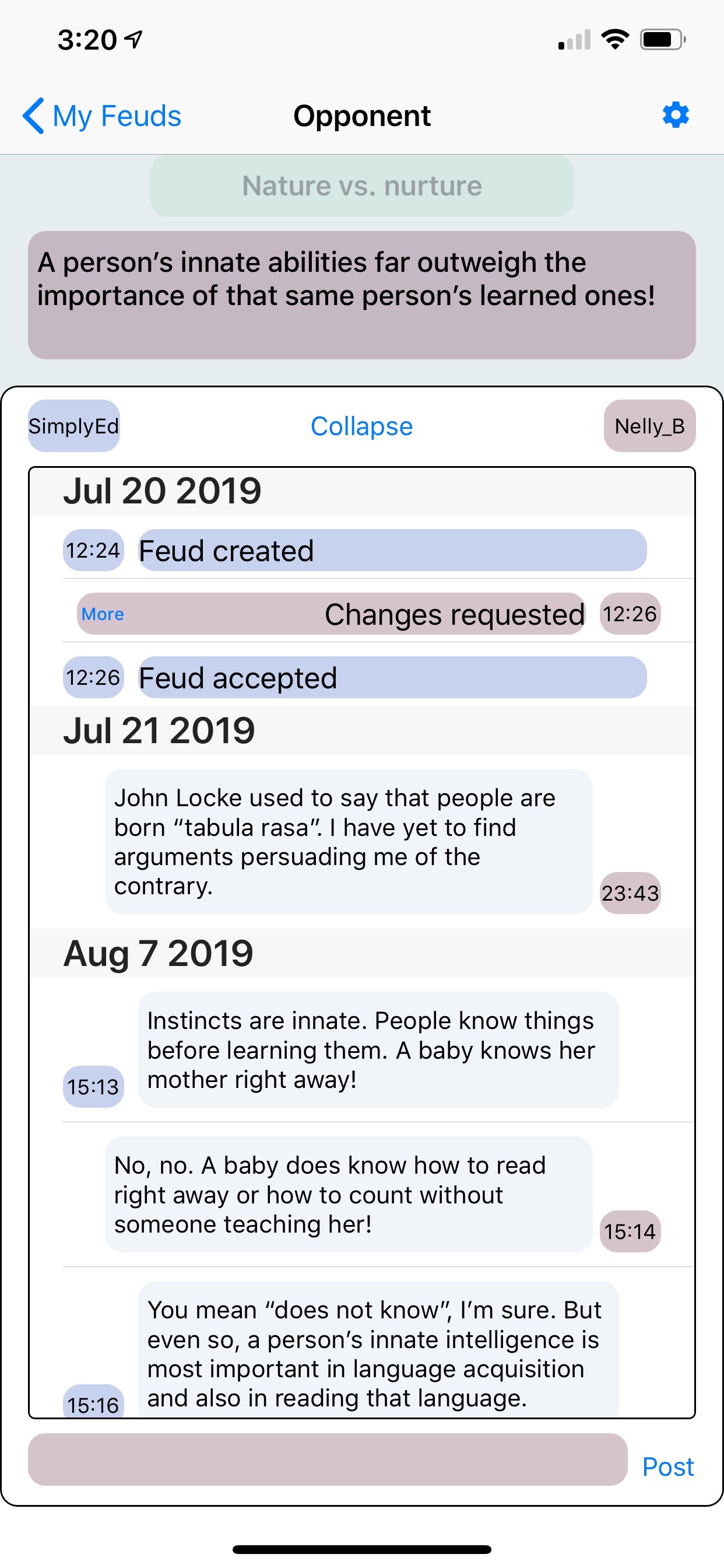
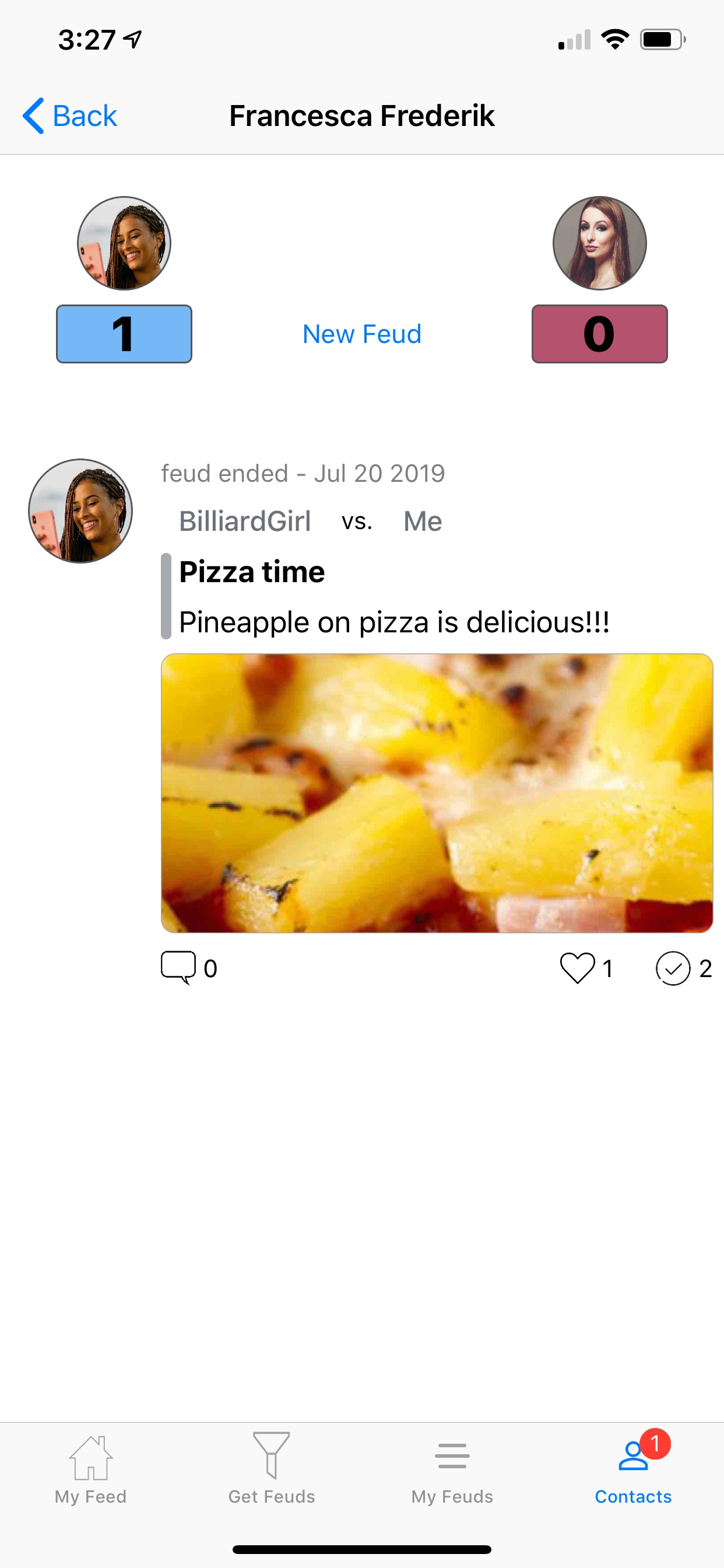
A feud is a debate between two users and it consists of a name, a claim, an anonymity setting (whether the profiles of the protagonists are visible to others) and an end date. It works like this: someone (we call him “proponent”) starts a feud by proposing a name, a claim, an anonymity and an end date to the other person; the other party (known as “opponent”) has to agree with the name, agree to oppose the claim, and agree on whether the feud should be public or private and on the end date of the whole affair (the opponent can ask for changes to any of these initial terms and then it’s the proponent’s turn to either agree or propose new changes, and so on); once the terms are agreed upon, the feud becomes active and the two parties will try to convince each other to concede by the end date in order to win. Other users can vote, like and share the feud, they can follow the proponent and o…
Preview
Real screenshots from the store listing.



Independent evidence report
Evidence and review signals
This is where the page changes from an app-store listing into an evidence report: findings, important reviews, pricing and a dated history.
What we measured
Each line is a measurement published as a measurement, never a verdict.
Each line is a measurement, published as a measurement. Where we have not looked, the line says so rather than reading as a zero.
Developer replies to reviews
Not assessed
Fewer than 50 reviews scanned — too few to state a rate
Price in the store description
States no price and billing period
Cancelling, in the store description
Does not say how to cancel
Themes reported by reviewers
Not assessed
This app's reviews have not been assessed yet
Five-star share of ratings
80–89% five-star
Arithmetic on the stores' own published rating counts. It says nothing about why the ratings fall where they do.
In the package we scanned
No package has been scanned for this app, so nothing is published about what it ships. That is an absence of evidence about the app, not a finding about it.
Graded bands · predicate set 1.4 · how these are measured
What the analysis found
App-specific findings, grouped by what each one rests on. How they are graded lives on its own page.
No review themes cleared the reporting threshold.
Assessment & version history
App changes and Appworthy events in one timeline.
What this app sells
Useful store-disclosed pricing, kept below the app listing.
Business modelFree
Prices and terms as disclosed by the store listing.