 Appworthy
Pay to progress
2 independent sources agreePay to progress: raised by 23 distinct reviewers (about 1 in 17 reviews we read)
Definition
Advancement or competition is gated behind spending money rather than playing.
Build a powerful empire and fight epic battles against millions of players!
Goodgame StudiosSerious warnings 1 confirmed warning. Checked: 400 reviews, the Android app’s code, the store listing and the privacy label.
From our automated analysis, 25 Oct 2026. Every label links to its evidence in the full report below.
This analysis describes version 4.144.21 of the app (the version number recorded inside the package we inspected), analyzed 2026-10-25 .
The store currently lists version 4.144.21, updated 2026-10-14.
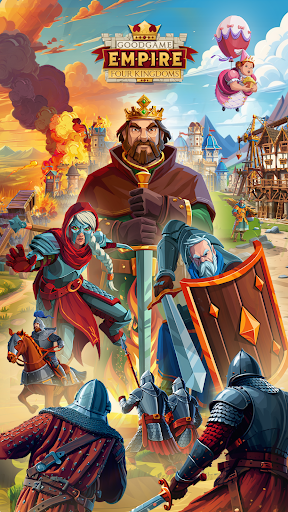
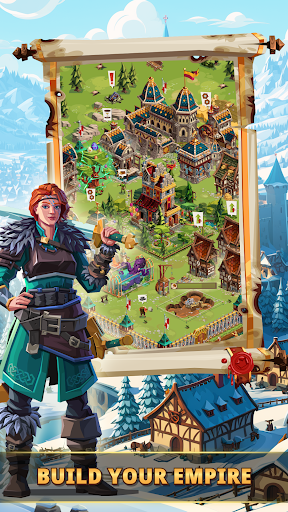
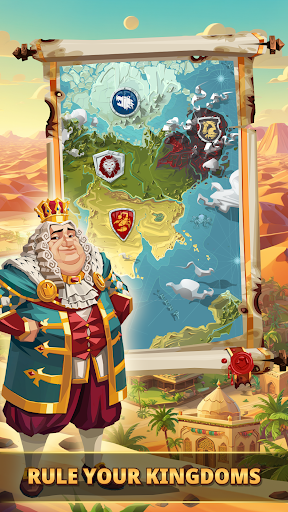
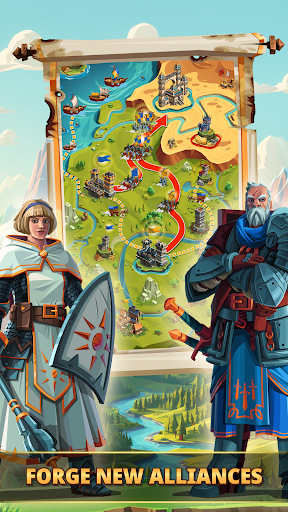
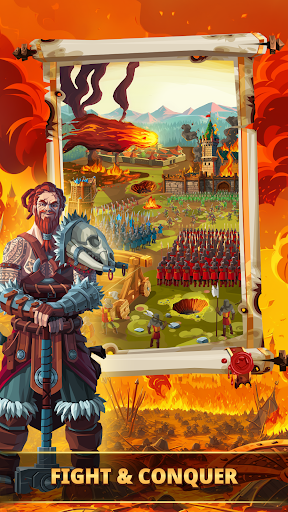
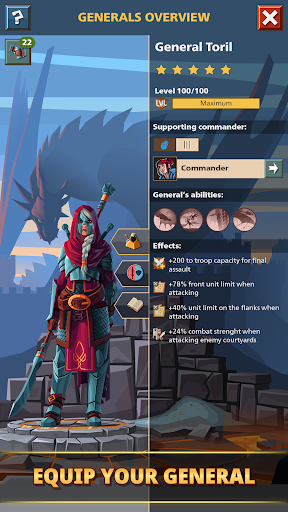
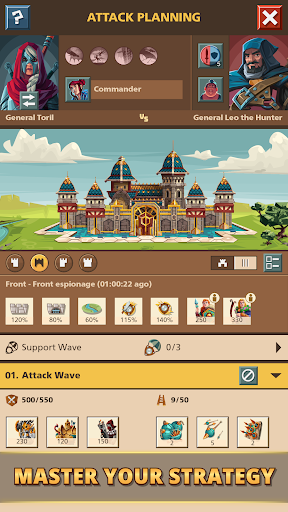

Store screenshots supplied by the developer.
Build a powerful empire and fight epic battles against millions of players!
As Lord and King, you have been called upon to build a mighty fortress and control the fate of your kingdom in this award-winning medieval adventure MMO strategy game!
Use your strategy to outsmart your enemies!
Unlock powerful Generals and use their abilities to your advantage. It is not about who has the biggest army, but who can plan their every move in the most cunning way. Each General has special talents that will give you an edge to defeat opponents, but only when used wisely. Plan your strategy carefully and see if you are wily enough to outsmart your enemies!…
From the developer’s store description.
For developers and the curious
The evidence, sources, measurements and versions behind every label above.
Findings that met the published evidence standard.
Pay to progress: raised by 23 distinct reviewers (about 1 in 17 reviews we read)
Advancement or competition is gated behind spending money rather than playing.
Specific evidence of a useful property, within the stated scope.
The developer's store data-safety disclosure states that data deletion can be requested; we have not seen a deletion control in the app's own text
The developer's data-safety disclosure on the store states that users can request deletion of their data, or the app's own text offers a way to delete the account. This restates what the developer declares; it is not a test of whether deletion works. Apple publishes no equivalent disclosure, so on an Apple-only listing only the app's own text can support it.
Open observations that have not cleared the evidence bar.
The app's own text says: "Open ad when you're back online."
This observation has not cleared the required evidence standard.
Advertising volume or placement that interrupts normal use: ads between every action, unskippable or forced full-screen ads.
Package artefact
sha256:b42b27e0e91dc3c59458ffff54ea02a4975364e08f15214c41ca03f8fe3f8976Sells a randomised reward ("Buy now and get %1$s%% bonus rubies!") and states no drop rates or odds anywhere in the app's own text
This observation has not cleared the required evidence standard.
The app sells randomised rewards — crates, chests, packs, pulls — and states no drop rates or odds anywhere in its own text, so what the money buys is unknowable before paying.
Package artefact
sha256:b42b27e0e91dc3c59458ffff54ea02a4975364e08f15214c41ca03f8fe3f8976The app's own text says: "Continue without agreeing"
This observation has not cleared the required evidence standard.
The app's own screens offer a way past sign-up — guest access, skipping, or browsing before registering — rather than gating the product behind an account. The store's privacy disclosure is checked alongside it: that disclosure is self-reported, so it corroborates this credit rather than establishing it.
Package artefact
sha256:b42b27e0e91dc3c59458ffff54ea02a4975364e08f15214c41ca03f8fe3f8976The app's own text says: "Open ad when you're back online."
This observation has not cleared the required evidence standard.
The app's own copy describes working without a connection — offline mode, downloading for offline use, or content saved for later. Shown because readers filter on it; it is a feature, not a fairness property, and never counts for or against an app.
Package artefact
sha256:b42b27e0e91dc3c59458ffff54ea02a4975364e08f15214c41ca03f8fe3f8976400 reviews read for this analysis. Each observation keeps the sample and store it was based on.
ive played this game since 2012 on my laptop. it has only cemented its legacy as a money grab/ pay to win manipulation game. you dont have to put money in but then ur play is very limited and only really fun at lower levels imo as when u…
Pay to win theory! what about my '4 winged knights & 1 eagle demon I bought with real money then the game made my casts obsolete and gave no compensation for the 5 casts that cost me almost 1,000 USD! total bs! I haven't even mentioned…
Pay to win all the way. they advertise that it's a new server, but there are already players playing the game for several weeks and without money no chance to to develop fast enough. It takes forever to build something, a lot of…
A sampled review illustrates one person’s experience. It does not establish a finding on its own.
“Not assessed” means we could not measure it. It is never a zero and never a pass.
Android package 4.144.21, scanned 25 Oct 2026. These describe that package, not the current store version.
Supporting measurements: not a complete list of possible harms or positives. Measurement vocabulary 1.4 · how these are measured
This analysis describes version 4.144.21 of the app (the version number recorded inside the package we inspected), analyzed 2026-10-25 .
The store currently lists version 4.144.21, updated 2026-10-14.
Each store’s release notes, as the developer wrote them. They are the developer’s words, not ours.
No release notes were provided for this version.
empireAssessed 2026-10-25 from 400 user reviews, the app's package, the store listing and its privacy label.
What the stores publish. Store ratings are the stores’ numbers, not Appworthy’s, and are never averaged across stores.
This assessment is produced automatically. Six independent signals are read — user reviews, SDKs in the app package, the app's own on-screen text, the app manifest, the store listing and the store privacy disclosure — and each candidate finding is filed under the sources that support it.
No charge stands on one kind of evidence — with one published exception. A finding is either a measured fact that anyone can reproduce (an ad SDK is in the package; every subscription bills weekly; the privacy label omits a tracker we can see), or it is an interpretation — and an interpretation needs independent sources to agree before it reaches the catch list. The exception is a harm only users can see: a charge may publish from reviews alone, as “Reported by N users”, once enough reviewers raise it to clear that charge’s own published bar. That agreement rule is what replaced the human reviewer, not a model’s confidence.
There is no overall score, on purpose. A 0–99 number was published here until 2026-09-15. It was withdrawn because it discriminated too weakly to be the instrument — 44.7% of every pair of apps tied — and because a single number is a verdict where a count is an observation. What publishes instead is a row of measurements, each of which says what was counted and, where we could not look, says that instead.
Findings under One source only are real reports we do not stand behind as findings. They are shown because withholding them entirely would hide a genuine complaint, and labelled because publishing them as charges would be an accusation off a single source.
Write to [email protected], or use the form. Name the finding, the app version and the evidence that needs correcting. Factual corrections are free and never depend on buying anything.