Japan Travel–Trip & Shinkansen

Japan Travel by NAVITIME is a Japan transit and trip-planning app that helps…

NAVITIME JAPAN CO., LTD.
Google Play rating4.3★14.3K ratings
PriceFreeIn-app purchases
Age4+Store age rating
CategoryUtilities

What we found

Full report

Some warnings 6 users report guilt-trip upgrade prompts; 5 users report the basics being behind a paywall. Nothing confirmed. Checked: 400 reviews, the store listing and the privacy label.

Money

Paywalls and prices

Pressure and ad claims

From our automated analysis, 27 Oct 2026. Every label links to its evidence in the full report below.

This analysis describes version 12.3.0 of the app, analyzed 2026-10-27 .

The store currently lists version 12.3.0, updated 2026-10-22.

Preview

Screenshot 1Screenshot 2Screenshot 3Screenshot 4Screenshot 5Screenshot 6Screenshot 7Screenshot 8

Store screenshots supplied by the developer.

About this app

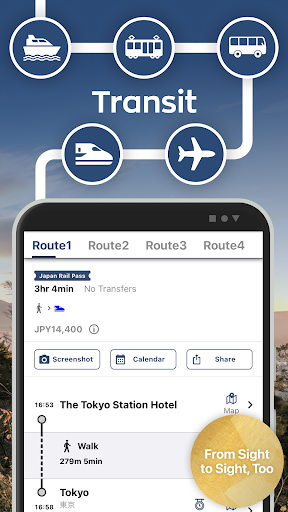
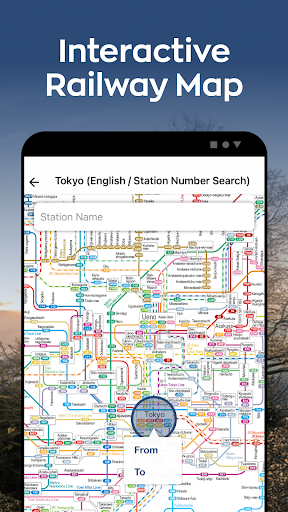
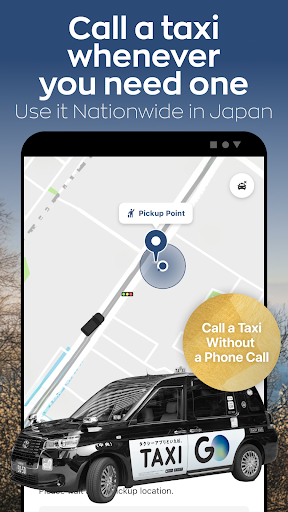
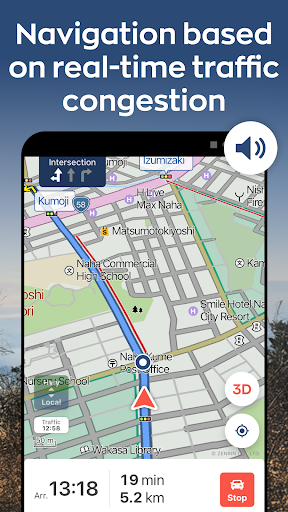
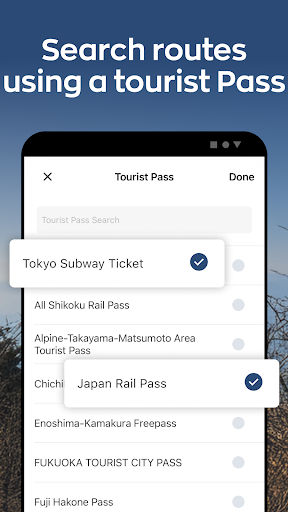
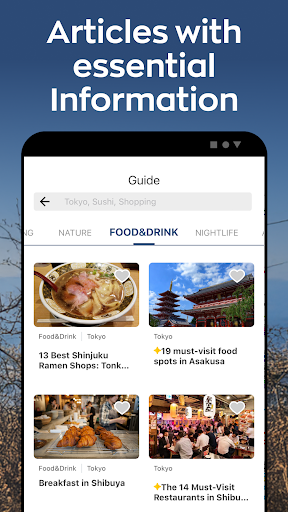
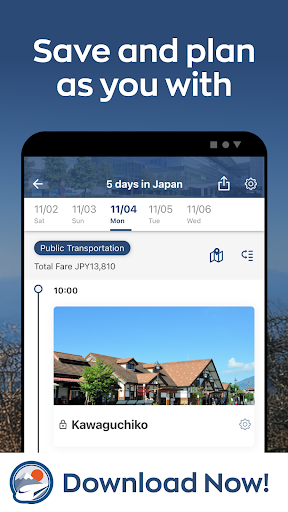
Japan Travel by NAVITIME is a Japan transit and trip-planning app that helps international visitors navigate Japan stress-free — by train, shinkansen, bus, taxi, ferry and on foot. Pass-aware route search (incl. the JR Pass), 100% bus route coverage including rural areas, travel guides, itineraries that auto-calculate travel times, and shinkansen ticket booking — all in one app, trusted for over 10 years.

Key Features

[Route Search]

Find the best route anywhere in Japan in seconds — shinkansen, JR, subways, local trains, buses, taxis, ferries and flights. Choose from 50+ rail and unlimited-ride passes such as the Japan Rail Pass, JR TOKYO Wide Pass and Tokyo Subway Ticket, and see which legs your pass covers, which cost extra, and what you actually pay.…

From the developer’s store description.

For developers and the curious

The full report

The evidence, sources, measurements and versions behind every label above.

Findings and evidence

1 published · 2 shown, not confirmed

Positives 1

Specific evidence of a useful property, within the stated scope.

Developer says data deletion can be requested

Measured

The developer's store data-safety disclosure states that data deletion can be requested; we have not seen a deletion control in the app's own text

Sources
The store listing
Agreement
A measured fact from one deterministic, checkable source.
Where measured
From the Google Play listing
Definition

The developer's data-safety disclosure on the store states that users can request deletion of their data, or the app's own text offers a way to delete the account. This restates what the developer declares; it is not a test of whether deletion works. Apple publishes no equivalent disclosure, so on an Apple-only listing only the app's own text can support it.

Open evidence

One source only — shown, not confirmed 2

Open observations that have not cleared the evidence bar.

Paywall blocks the basics

One source only

Paywall blocks the basics: raised by 5 distinct reviewers (about 1 in 80 reviews we read)

Sources
User reviews
Agreement
Only one kind of source so far. Shown, not counted.
Where measured
From Google Play reviews

This observation has not cleared the required evidence standard.

Definition

The core of the app — not extras — sits behind payment, or previously-free function moved behind a paywall.

Open evidence
How we know
Share and sample
1.3% of the 400 reviews read.

Upgrade prompts use guilt-trip wording

One source only

Constant upsell pressure: raised by 6 distinct reviewers (about 1 in 67 reviews we read)

Sources
User reviews
Agreement
Only one kind of source so far. Shown, not counted.
Where measured
From Google Play reviews

This observation has not cleared the required evidence standard.

Definition

Declining an upgrade is written as a loss ('No thanks, I don't want to improve'), or users report being repeatedly pushed to subscribe during normal use.

Open evidence
How we know
Share and sample
1.5% of the 400 reviews read.

Nothing was published as a thing to watch for in this assessment. That is not a finding that nothing is wrong with the app.

What reviewers report

400 reviews read · 2 review-based observations

400 reviews read for this analysis. Each observation keeps the sample and store it was based on.

Paywall blocks the basics

Shown, not confirmed

The most frustrating travel app I've ever used. It only shows the next 3 routes at a time, if you want to see 3 more you have to select one of them, then tap "next 3". Want to see any more? Better set the time to the future and do another…

1★ · Google Play · 2024-04-10

Website and app have different results. Detailed features are locked behind a pay wall so it allows you to get lost if you don't know how to read the train maps which takes a longer time to analyze and navigate.

1★ · Google Play · 2024-02-14

While the search function with transit passes like the JR Rail Pass is usefull, the fact that details like time tables and in-between stations are hidden behind a paywall (as opposed to its predecessor by the JNTO) is a major downside…

2★ · Google Play · 2025-01-11

Upgrade prompts use guilt-trip wording

Shown, not confirmed

DON'T USE: ITS A SCAM! even with paid service bloated with ads and popups. popups can't be closed, they still open the details pages. not possible to have premium on phone and tablet, thus absolutely useless for travel planning. the paid…

1★ · Google Play · 2026-04-30

It's decent but it feels pretty bulky. The app is full of different features, most of which many people don't need. The constant pestering to subscribe is pretty annoying too, and for some reason the app needs to stay open 24/7 for…

3★ · Google Play · 2023-10-25

No bus route map so you can't see where you are with respect to the route. Almost unusable without monthly Premium charge. Constant popups to get you to buy Premium. Just use Google Maps.

1★ · Google Play · 2025-09-25

A sampled review illustrates one person’s experience. It does not establish a finding on its own.

Measurements

5 measured · 3 not assessed

“Not assessed” means we could not measure it. It is never a zero and never a pass.

From store data and reviews

Developer replies to reviews
Replies to fewer than 1 review in 20
Price in the store description
The store description doesn’t list prices (most don’t)
Cancelling, in the store description
The store description doesn’t say how to cancel (most don’t)
Themes reported by reviewers
2 themes reported
Counted from the reviews we have read for this app. "No theme reported" means no theme reached our reporting threshold — it is not a finding that nothing is wrong with this app, and we do not say it is.
Five-star share of ratings
65–79% five-star
Arithmetic on the stores' own published rating counts. It says nothing about why the ratings fall where they do.

In the app package we scanned

No package has been scanned for this app, so nothing is published about what it ships. That is an absence of evidence, not a finding.

Sensitive permissions
Not assessed
No package has been scanned for this app
Analytics or tracking SDKs in the scanned package
Not assessed
No package has been scanned for this app
Advertising SDKs in the scanned package
Not assessed
No package has been scanned for this app
How we know

Supporting measurements: not a complete list of possible harms or positives. Measurement vocabulary 1.4 · how these are measured

Versions and dates analysed

Assessed 27 Oct 2026

This analysis describes version 12.3.0 of the app, analyzed 2026-10-27 .

The store currently lists version 12.3.0, updated 2026-10-22.

Store update history

Each store’s release notes, as the developer wrote them. They are the developer’s words, not ours.

Google Play

Version 12.3.0 · 2026-10-22

No release notes were provided for this version.

Assessment record

Status
Automated analysis
App identifier
japan-travel-google-com-navitime-inbound-walk
Assessment date
27 Oct 2026
Sources used
3 independent signals: user reviews, the store listing and the store privacy disclosure
Reviews read
400
Package examined
No package scan
Human inspection
Not completed

Assessed 2026-10-27 from 400 user reviews, the store listing and its privacy label. We have not scanned the app's package, so nothing on this page was read from inside the app itself.

How we know
Measurement vocabulary
1.4

How this page was produced

Analyzed 2026-10-27 Version analyzed: 12.3.03 independent signals400 reviews scannedConfidence: HighNot human-reviewedVocabulary v1.13Methodology v1.3
Signals run: user reviews, the store listing and the store privacy disclosure. Not yet checked: SDKs in the app package, the app's own on-screen text and the app manifest.

Store facts

Google Play

What the stores publish. Store ratings are the stores’ numbers, not Appworthy’s, and are never averaged across stores.

Google Play

Store rating
4.25 ★ · 14,339 ratings
Version
12.3.0
Updated
22 Oct 2026
Price
Free · In-app purchases
Age rating
4+
Size
Not supplied
Open in Google Play
Developer
NAVITIME JAPAN CO., LTD.
Category
Utilities
Listing price
Free · In-app purchases

Purchases the store lists

 What this app sells
Google Play doesn’t publish per-purchase prices.

Method and limits

What this report can and cannot show

How the automated analysis works

This assessment is produced automatically. Three independent signals are read — user reviews, the store listing and the store privacy disclosure — and each candidate finding is filed under the sources that support it.

No charge stands on one kind of evidence — with one published exception. A finding is either a measured fact that anyone can reproduce (an ad SDK is in the package; every subscription bills weekly; the privacy label omits a tracker we can see), or it is an interpretation — and an interpretation needs independent sources to agree before it reaches the catch list. The exception is a harm only users can see: a charge may publish from reviews alone, as “Reported by N users”, once enough reviewers raise it to clear that charge’s own published bar. That agreement rule is what replaced the human reviewer, not a model’s confidence.

There is no overall score, on purpose. A 0–99 number was published here until 2026-09-15. It was withdrawn because it discriminated too weakly to be the instrument — 44.7% of every pair of apps tied — and because a single number is a verdict where a count is an observation. What publishes instead is a row of measurements, each of which says what was counted and, where we could not look, says that instead.

Findings under One source only are real reports we do not stand behind as findings. They are shown because withholding them entirely would hide a genuine complaint, and labelled because publishing them as charges would be an accusation off a single source.

Limits of this report

  • A package scan is static. It identifies code and text in one Android build. It does not measure a live ad session, test a deletion request, or count the steps needed to cancel.
  • Reviews keep their sample. A review-only charge shows distinct reviewers, the share and the sample size, and is published only once it clears that label’s published threshold. Calibration labels are machine-drafted and not yet confirmed by a person.
  • Not assessed is a state. It is never a zero and never a pass.
  • A missing label is not a clean bill of health. It means the evidence did not support one, not that the app is problem-free.
Not yet human-reviewed. A hands-on test can confirm or contradict a finding and adds its own measurements; it does not change a measurement row. Hands-on inspections are not yet open.

Request a correction

[email protected]

Write to [email protected], or use the form. Name the finding, the app version and the evidence that needs correcting. Factual corrections are free and never depend on buying anything.