
Pitch Trainer - Ear Training

Intervals & Chords Practice

Ear & Pitch Training Studios LLC
App Store rating4.7★505 ratings
Google Play rating4.6★7.6K ratings
PriceFreeIn-app $2.99–$59.99
Age4+Store age rating
Size88 MBiPhone download
CategoryLifestyle

What we found

Full report

Too little checked to say Only 250 reviews read, too few to say.

Money

  • Free to download · in-app purchases $2.99–$59.99 (10 listed, the most the App Store shows). Weekly plans $2.99 (about $155 a year), $4.99 (about $259 a year) and $7.99 (about $415 a year); monthly plan $8.99 (about $108 a year); yearly plans $14.99, $24.99, $39.99, $49.99 and $59.99; 3-month plan $19.99 (about $80 a year). Google Play doesn’t publish per-purchase prices.
  • If you subscribe through the store, cancel in iPhone Settings → your name → Subscriptions or Google Play → Payments & subscriptions → Subscriptions. Deleting the app doesn’t cancel a subscription.

From our automated analysis, 31 Oct 2026.

This analysis describes version 6.5.2 of the app, analyzed 2026-10-31 .

The store currently lists version 6.5.2, updated 2026-10-25.

Preview

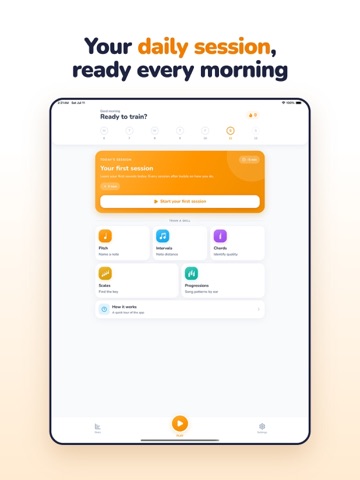
Screenshot 1Screenshot 2Screenshot 3Screenshot 4Screenshot 5Screenshot 6Screenshot 7Screenshot 8

Store screenshots supplied by the developer.

About this app

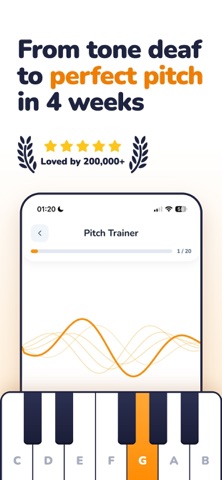
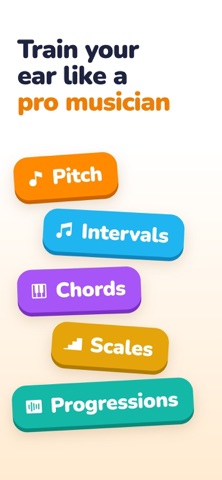
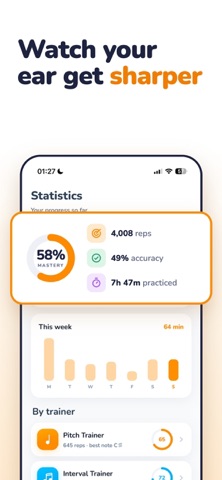
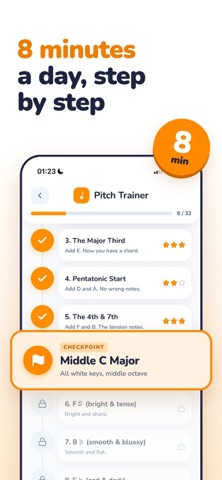
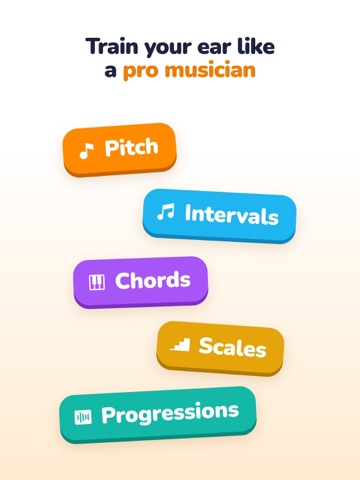
Pitch Trainer helps you build real ear skills: identify notes, recognize intervals, hear chord quality, follow chord progressions, and detect scales with confidence. It's built around structured lessons plus fast custom drills, so you always know what to practice next and you can improve consistently.

World-class training tools:

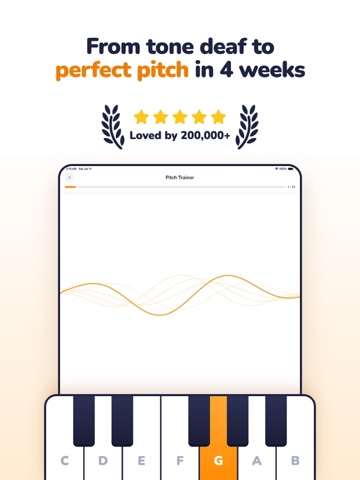
1) Pitch Trainer (Note Recognition)

- Train your ear to identify individual notes by name.

- Structured lessons that expand across the 12 chromatic notes

- Practice across different octaves (low, medium, high, random)

- Optional reference pitch to help you learn faster

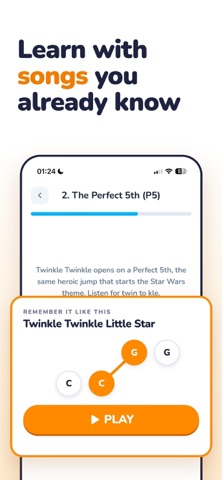
2) Interval Training

- Learn to recognize the distance between two notes.

- Train all common intervals from minor 2nd through octave

- Melodic vs harmonic options (separate vs together)

- Ascending and descending practice

- Short theory explanations and mnemonics to lock concepts in…

From the developer’s store description.

For developers and the curious

The full report

The evidence, sources, measurements and versions behind every label above.

Findings and evidence

1 published · 0 shown, not confirmed

Positives 1

Specific evidence of a useful property, within the stated scope.

Developer says data deletion can be requested

Measured

The developer's store data-safety disclosure states that data deletion can be requested; we have not seen a deletion control in the app's own text

Sources
The store listing
Agreement
A measured fact from one deterministic, checkable source.
Where measured
From the Google Play listing
Definition

The developer's data-safety disclosure on the store states that users can request deletion of their data, or the app's own text offers a way to delete the account. This restates what the developer declares; it is not a test of whether deletion works. Apple publishes no equivalent disclosure, so on an Apple-only listing only the app's own text can support it.

Open evidence

Nothing was published as a thing to watch for in this assessment. That is not a finding that nothing is wrong with the app.

What reviewers report

250 reviews read · 0 review-based observations

No review-based observation is published in this assessment. That does not establish that reviewers had no problems.

Measurements

5 measured · 3 not assessed

“Not assessed” means we could not measure it. It is never a zero and never a pass.

From store data and reviews

Developer replies to reviews
Replies to fewer than 1 review in 20
Price in the store description
The store description doesn’t list prices (most don’t)
Cancelling, in the store description
The store description says how to cancel
Themes reported by reviewers
No theme reported
Counted from the reviews we have read for this app. "No theme reported" means no theme reached our reporting threshold — it is not a finding that nothing is wrong with this app, and we do not say it is.
Five-star share of ratings
65–79% five-star
Arithmetic on the stores' own published rating counts. It says nothing about why the ratings fall where they do.

In the app package we scanned

No package has been scanned for this app, so nothing is published about what it ships. That is an absence of evidence, not a finding.

Sensitive permissions
Not assessed
No package has been scanned for this app
Analytics or tracking SDKs in the scanned package
Not assessed
No package has been scanned for this app
Advertising SDKs in the scanned package
Not assessed
No package has been scanned for this app
How we know

Supporting measurements: not a complete list of possible harms or positives. Measurement vocabulary 1.4 · how these are measured

Versions and dates analysed

Assessed 31 Oct 2026

This analysis describes version 6.5.2 of the app, analyzed 2026-10-31 .

The store currently lists version 6.5.2, updated 2026-10-25.

Store update history

Each store’s release notes, as the developer wrote them. They are the developer’s words, not ours.

App Store

Version 6.5 · 2026-10-26
All-new instrument sounds. Piano, guitar, cello, clarinet and trumpet are now recorded from real studio instruments, note by note, so every pitch sounds rich and natural across the whole range. You can also now sign in with just your email: enter your address, type in the code we send you, and you're in, no password needed.

Google Play

Version 6.5.2 · 2026-10-25

No release notes were provided for this version.

Assessment record

Status
Automated analysis
App identifier
pitch-trainer-apple-6758199236
Assessment date
31 Oct 2026
Sources used
3 independent signals: user reviews, the store listing and the store privacy disclosure
Reviews read
250
Package examined
No package scan
Human inspection
Not completed

Assessed 2026-10-31 from 250 user reviews, the store listing and its privacy label. We have not scanned the app's package, so nothing on this page was read from inside the app itself.

How we know
Measurement vocabulary
1.4

How this page was produced

Analyzed 2026-10-31 Version analyzed: 6.5.23 independent signals250 reviews scannedConfidence: HighNot human-reviewedVocabulary v1.14Methodology v1.3
Signals run: user reviews, the store listing and the store privacy disclosure. Not yet checked: SDKs in the app package, the app's own on-screen text and the app manifest.

Store facts

App Store · Google Play

What the stores publish. Store ratings are the stores’ numbers, not Appworthy’s, and are never averaged across stores.

App Store

Store rating
4.68 ★ · 505 ratings
Version
6.5
Updated
26 Oct 2026
Price
Free · In-app purchases
Age rating
4+
Size
88 MB
Open in App Store

Google Play

Store rating
4.58 ★ · 7,564 ratings
Version
6.5.2
Updated
25 Oct 2026
Price
Free · In-app purchases
Age rating
4+
Size
Not supplied
Open in Google Play
Developer
Ear & Pitch Training Studios LLC
Category
Lifestyle
Listing price
Free · In-app purchases

Purchases the store lists

 What this app sells

From the store listing. Billing terms are read from each purchase’s name — the stores don’t publish them — so treat them as a strong hint, not a disclosure.

Google Play doesn’t publish per-purchase prices. The list below covers the other store only.
Subscriptions10
Pitch Trainer Weekly AccessWeekly$7.99
Weekly SubscriptionWeekly$4.99
Pitch Trainer Subscription WeeklyWeekly$2.99
Pitch Trainer MonthlyMonthly$8.99
Pitch Trainer 3 MonthsEvery 3 months$19.99
Pitch Trainer Annual OfferYearly$24.99
Pitch Trainer Annual OfferYearly$14.99
Pitch Trainer Annual AccessYearly$49.99
Annual SubscriptionYearly$39.99
Pitch Trainer Annual SubscriptionYearly$59.99
This list is cut off. Apple shows at most 10 in-app purchases, and this app is at the limit — so it very likely sells more than we can see.

Method and limits

What this report can and cannot show

How the automated analysis works

This assessment is produced automatically. Three independent signals are read — user reviews, the store listing and the store privacy disclosure — and each candidate finding is filed under the sources that support it.

No charge stands on one kind of evidence — with one published exception. A finding is either a measured fact that anyone can reproduce (an ad SDK is in the package; every recurring plan the store lists is named as weekly, the term read from the purchase names, with a list cut off at the store’s 10-item maximum not assessed; the privacy label omits a tracker we can see), or it is an interpretation — and an interpretation needs independent sources to agree before it reaches the catch list. The exception is a harm only users can see: a charge may publish from reviews alone, as “Reported by N users”, once enough reviewers raise it to clear that charge’s own published bar. That agreement rule is what replaced the human reviewer, not a model’s confidence.

There is no overall score, on purpose. A 0–99 number was published here until 2026-09-15. It was withdrawn because it discriminated too weakly to be the instrument — 44.7% of every pair of apps tied — and because a single number is a verdict where a count is an observation. What publishes instead is a row of measurements, each of which says what was counted and, where we could not look, says that instead.

Findings under One source only are real reports we do not stand behind as findings. They are shown because withholding them entirely would hide a genuine complaint, and labelled because publishing them as charges would be an accusation off a single source.

Limits of this report

  • A package scan is static. It identifies code and text in one Android build. It does not measure a live ad session, test a deletion request, or count the steps needed to cancel.
  • Reviews keep their sample. A review-only charge shows distinct reviewers, the share and the sample size, and is published only once it clears that label’s published threshold. Calibration labels are machine-drafted and not yet confirmed by a person.
  • Not assessed is a state. It is never a zero and never a pass.
  • A missing label is not a clean bill of health. It means the evidence did not support one, not that the app is problem-free.
Not yet human-reviewed. A hands-on test can confirm or contradict a finding and adds its own measurements; it does not change a measurement row. Hands-on inspections are not yet open.

Request a correction

[email protected]

Write to [email protected], or use the form. Name the finding, the app version and the evidence that needs correcting. Factual corrections are free and never depend on buying anything.