 Appworthy

Pay to progress
2 independent sources agreePay to progress: raised by 8 distinct reviewers (about 1 in 50 reviews we read)
Definition
Advancement or competition is gated behind spending money rather than playing.
Serious warnings 1 confirmed warning, and users report 1 more thing. Checked: 400 reviews, the Android app’s code, the store listing and the privacy label.
From our automated analysis, 31 Oct 2026. Every label links to its evidence in the full report below.
This analysis describes version 1.0.15 of the app (the version number recorded inside the package we inspected), analyzed 2026-10-31 .
The store currently lists version 1.0.15, updated 2026-07-30.
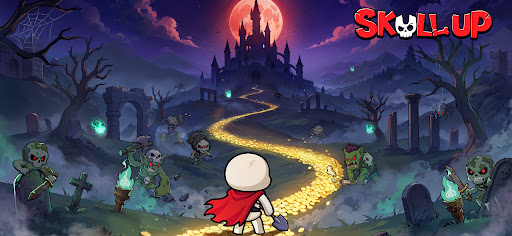

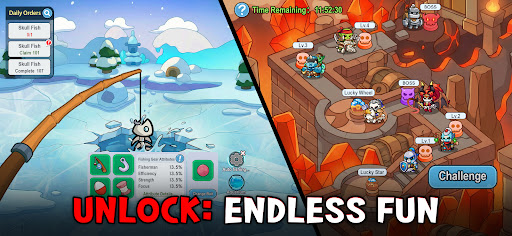
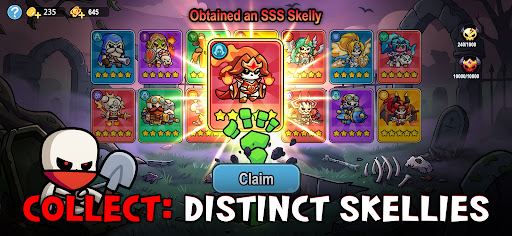
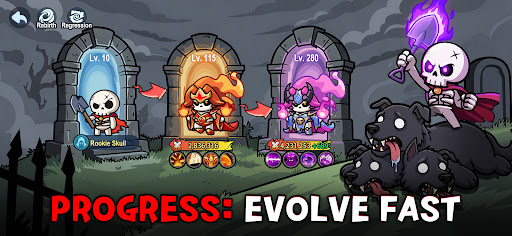
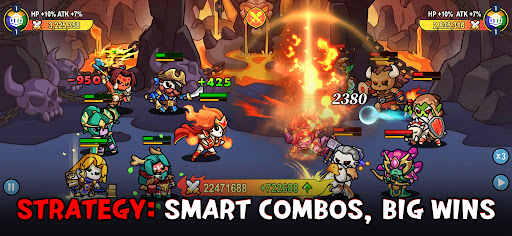
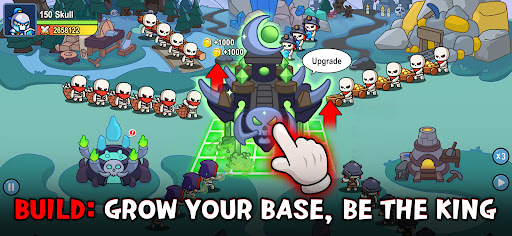
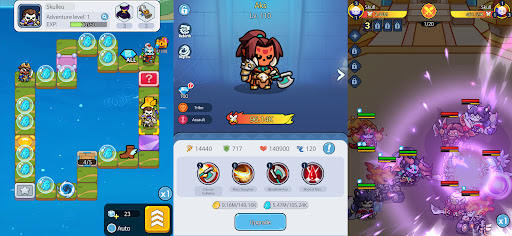
Store screenshots supplied by the developer.
[Game Features]
Even a rookie skull can become the Skull King! In Skull Up, you will rise from the bottom to the throne: collect over 60 Skellies to form your unique teams, enjoy idle management with abundant rewards, and unlock multiple adventures. Come and unleash the power of the undead and evolve from a nobody into the Skull King!
[Endless Fun, Underworld Adventures]
A rookie skull uncovered hidden treasures! In Skull Up, you can amass massive resources through management gameplay, or defeat mighty enemies with smart strategies. Join a guild and fight alongside your bone buddies! More content await—nonstop excitement guaranteed!
[Diverse Skellies, Boundless Power]
Gather various Skellies during your path to becoming the King! During this adventure, you will encounter over 60 unique Skellies with distinct looks and abilities.…
From the developer’s store description.
For developers and the curious
The evidence, sources, measurements and versions behind every label above.
Findings that met the published evidence standard.
Pay to progress: raised by 8 distinct reviewers (about 1 in 50 reviews we read)
Advancement or competition is gated behind spending money rather than playing.
Specific evidence of a useful property, within the stated scope.
The developer's store data-safety disclosure states that data deletion can be requested; we have not seen a deletion control in the app's own text
The developer's data-safety disclosure on the store states that users can request deletion of their data, or the app's own text offers a way to delete the account. This restates what the developer declares; it is not a test of whether deletion works. Apple publishes no equivalent disclosure, so on an Apple-only listing only the app's own text can support it.
No advertising or mediation SDK among the 7 SDKs detected in the package
No advertising or mediation SDK of any kind was found in the package.
Package artefact
sha256:0635ebe4186a0e2c9bc906ebf1abe373043e884af64dd7c7a4b3a1df21720e65Open observations that have not cleared the evidence bar.
Misleading advertising: raised by 20 distinct reviewers (about 1 in 20 reviews we read)
This observation has not cleared the required evidence standard.
Reviewers repeatedly report that the app is not what its advertising showed. We never see the ad creative itself, so nothing we collect can corroborate or refute this — it is published as an attributed user report: what reviewers say, and how many of them said it.
The app's own text says: "Akun tamu"
This observation has not cleared the required evidence standard.
The app's own screens offer a way past sign-up — guest access, skipping, or browsing before registering — rather than gating the product behind an account. The store's privacy disclosure is checked alongside it: that disclosure is self-reported, so it corroborates this credit rather than establishing it.
Package artefact
sha256:0635ebe4186a0e2c9bc906ebf1abe373043e884af64dd7c7a4b3a1df21720e65The app's own text says: "Entre novamente no jogo para me ver depois de se esconder"
This observation has not cleared the required evidence standard.
The app's own copy describes working without a connection — offline mode, downloading for offline use, or content saved for later. Shown because readers filter on it; it is a feature, not a fairness property, and never counts for or against an app.
Package artefact
sha256:0635ebe4186a0e2c9bc906ebf1abe373043e884af64dd7c7a4b3a1df21720e65400 reviews read for this analysis. Each observation keeps the sample and store it was based on.
I really, really wanted to love this game, as I love skulls. To summarize, there's 3 currencies you have to use to level up your skulls. You will be bottlenecked. Second, it's so P2W, it makes Slime Castle look F2P friendly. You need at…
This game is great and addicting but ultimately dont waste your time, its comepletely pay to win.. ppl that spend $1000's are on top and will be forever. So if youre rich then this game is great.
it is nothing like the ads , absolutely nothing , it is kind of fun , very much pay to win ,
it is nothing like the ads , absolutely nothing , it is kind of fun , very much pay to win ,
this is nothing like the advertisements. it's a shameless cash grab, and the tutorial drags on forever. classic mobile game, the only thing it has going for it is that it doesn't have an energy system.
This game is not what was advertised... 😑
A sampled review illustrates one person’s experience. It does not establish a finding on its own.
“Not assessed” means we could not measure it. It is never a zero and never a pass.
Android package 1.0.15, scanned 30 Oct 2026. These describe that package, not the current store version.
Supporting measurements: not a complete list of possible harms or positives. Measurement vocabulary 1.4 · how these are measured
This analysis describes version 1.0.15 of the app (the version number recorded inside the package we inspected), analyzed 2026-10-31 .
The store currently lists version 1.0.15, updated 2026-07-30.
Each store’s release notes, as the developer wrote them. They are the developer’s words, not ours.
No release notes were provided for this version.
skull-up-google-com-efun-euklqbAssessed 2026-10-31 from 400 user reviews, the app's package, the store listing and its privacy label.
What the stores publish. Store ratings are the stores’ numbers, not Appworthy’s, and are never averaged across stores.
This assessment is produced automatically. Six independent signals are read — user reviews, SDKs in the app package, the app's own on-screen text, the app manifest, the store listing and the store privacy disclosure — and each candidate finding is filed under the sources that support it.
No charge stands on one kind of evidence — with one published exception. A finding is either a measured fact that anyone can reproduce (an ad SDK is in the package; every recurring plan the store lists is named as weekly, the term read from the purchase names, with a list cut off at the store’s 10-item maximum not assessed; the privacy label omits a tracker we can see), or it is an interpretation — and an interpretation needs independent sources to agree before it reaches the catch list. The exception is a harm only users can see: a charge may publish from reviews alone, as “Reported by N users”, once enough reviewers raise it to clear that charge’s own published bar. That agreement rule is what replaced the human reviewer, not a model’s confidence.
There is no overall score, on purpose. A 0–99 number was published here until 2026-09-15. It was withdrawn because it discriminated too weakly to be the instrument — 44.7% of every pair of apps tied — and because a single number is a verdict where a count is an observation. What publishes instead is a row of measurements, each of which says what was counted and, where we could not look, says that instead.
Findings under One source only are real reports we do not stand behind as findings. They are shown because withholding them entirely would hide a genuine complaint, and labelled because publishing them as charges would be an accusation off a single source.
Write to [email protected], or use the form. Name the finding, the app version and the evidence that needs correcting. Factual corrections are free and never depend on buying anything.